
Camino de Santiago
with a donkey
Saint James of Compostela
The Camino de Santiago is one of Europe’s most iconic hiking routes, listed as a UNESCO World Heritage site.
Long-Distance Hiking Trail
A bit of history
Historically, it allowed pilgrims to travel to the tomb of the Apostle Saint James in Santiago de Compostela, Spain. Today, it attracts not only believers but also hiking enthusiasts and personal challenge seekers, looking for a spiritual, cultural, or sporting experience.
Exceptional Architectural Heritage
The route is dotted with diverse landscapes, picturesque villages, and historic monuments. Hikers pass through authentic regions, alternating between mountains, plains, and forests, discovering a unique architectural heritage — here Romanesque churches, there medieval bridges or monasteries. The trail is also a place of meetings and exchanges, with a true community of walkers sharing their experiences along the way.
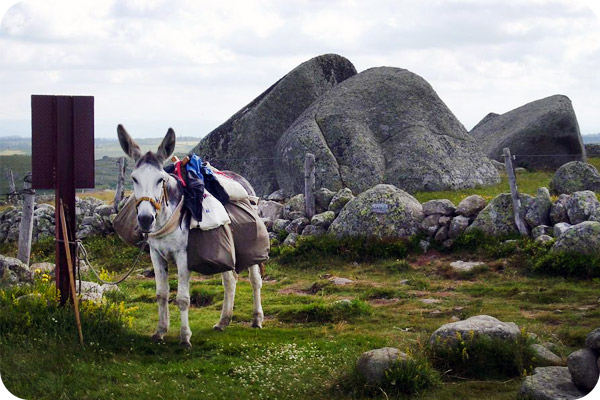
Other Remarkable Adventures
Among the best-known routes are the Camino Francés, which starts at Saint-Jean-Pied-de-Port and crosses northern Spain, and the Via Podiensis, which begins in Le Puy-en-Velay and is one of the most popular routes in France. Other paths like the Vézelay Way or the Tours Way offer equally rich alternatives full of discoveries.
Advice from FNAR Donkey Handlers
Walking the Camino de Santiago with a donkey means immersing yourself in a journey where the inner experience matters as much as the physical trek. But you don’t need to be a pilgrim to embark on this well-marked path with accommodations adapted for walkers.
Accessible to all, whether for a few days or a journey of several weeks, whether you walk for challenge, spirituality, or discovery, this legendary route leaves no one indifferent.
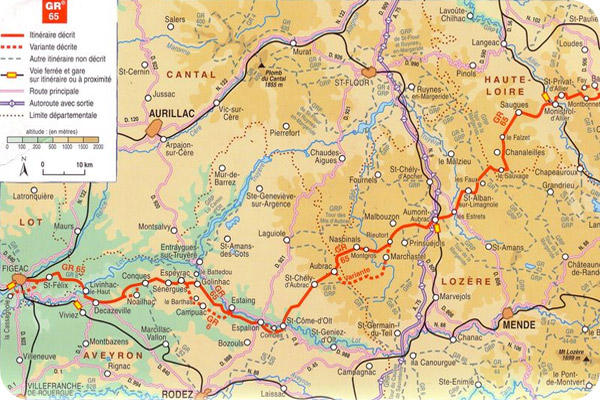
-
LES ANES DES SUCS
43200 - St Jeures
0471655140
lesanesdessucs@laposte.net
See its dedicated page -
BONNET D’ANE ET CERF VOLANT
45450 - Ingrannes
06 73 39 92 70
contact@abacvloiret.com
See its dedicated page -
La Belle Ânée
86600 - Jazeneuil
0683560676
rando@ane-poitou.fr
See its dedicated page -
LES ANES DE MONEDIES
12300 - ALMONT-LES-JUNIES
05 65 43 19 51
lesanes@monedies.fr
See its dedicated page -
BALLADANES
34260 - LA TOUR SUR ORB
0467231053
balladanes@wanadoo.fr
See its dedicated page -
LES ANES DE MARGERIDE
48120 - St Alban sur Limagnole
0622926672
lesanesenmargeride@orange.fr
See its dedicated page -
AUX ANES ETC
44530 - Guenrouët
0663627597
auxanesetc44@gmail.com
See its dedicated page -
GOG'ANE
49350 - Gennes val de Loire
0682150226
gog-ane@orange.fr
See its dedicated page